
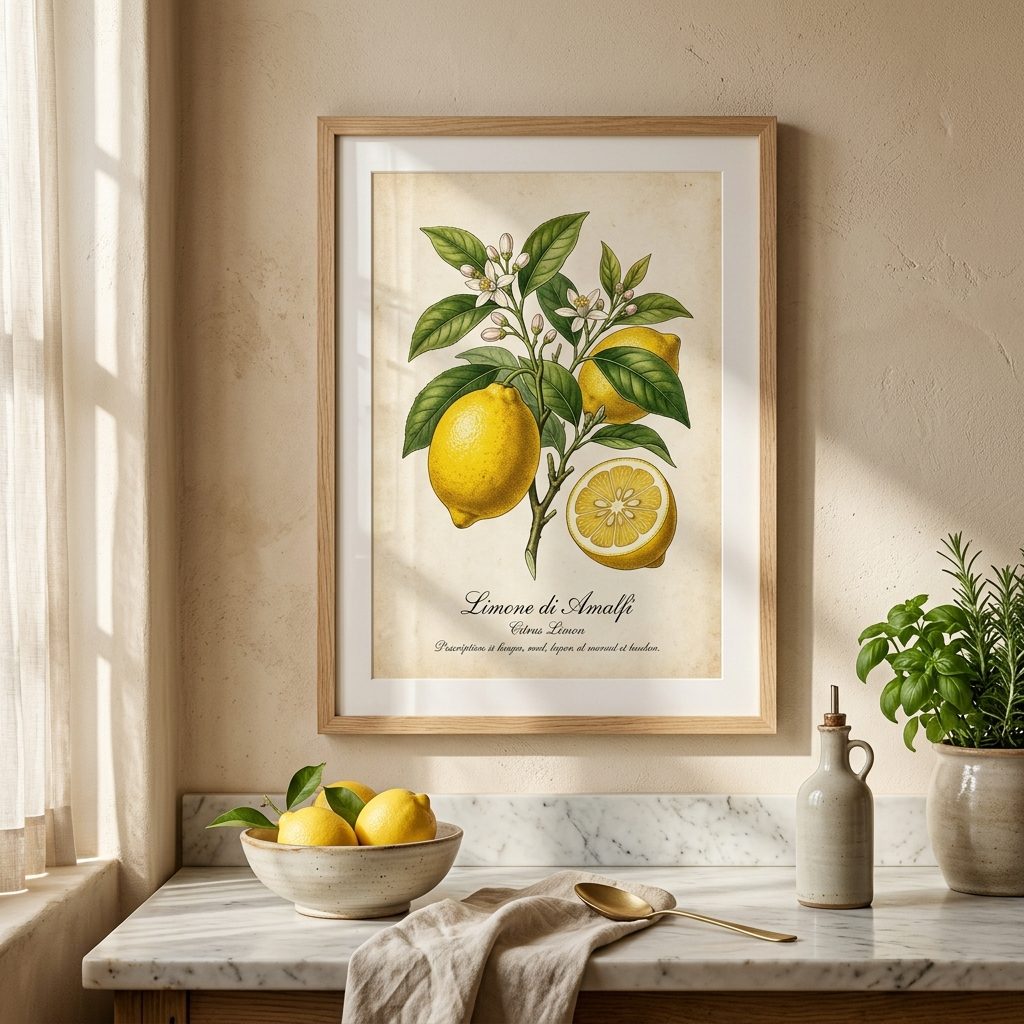
The Warmth and Radiance of Mediterranean Culinary Spaces
The kitchen is the sensory anchor of the home—a space defined by the aroma of simmering herbs, the tactile pleasure of rolling dough, and the laughter of shared family meals. In modern farmhouse, transitional, and European rustic kitchens, introducing botanical citrus art—specifically Amalfi lemons, bitter oranges, and olive branch engravings—infuses vibrant warmth, natural light, and historical charm into everyday cooking spaces.
Featuring artworks like the Lemon Kitchen Print and printable keepsakes like our Family Recipe Card Template, here is how to curate a cohesive, durable kitchen art display.
1. Color Palette Harmony: The Tuscan Farmhouse Formula
Vibrant citrus artwork succeeds when grounded by earthy, low-saturation complementary tones:
- **Tuscan Olive Green (#556B2F)**: Echoes the natural foliage of citrus trees. Introduce through potted rosemary, olive sprigs in clay pots, or sage green kitchen cabinetry.
- **Heirloom Terracotta (#A0522D)**: Warm terracotta floor tiles, unglazed earthenware bowls, and copper cookware provide rustic grounding that balances bright lemon pigments.
- **Unlacquered Antique Brass**: Brass picture lights, vintage gallery frame lips, and cabinet knobs tie together warm metallic accents across the kitchen.
- **Warm Linen White (#FAF7EE)**: Replace sterile cool-white backdrops with warm cream, limewash, or ivory subway tiles to give vintage paper prints a cohesive home.
2. High-Impact Kitchen Placement Locations
Location A: The Breakfast Nook Focal Point
Hang a pair of vertical 16x20 or 18x24 citrus prints centered above a banquette bench or wooden dining table. Mount at standard 58-inch eye level to anchor the seating zone as an intimate European bistro corner.
Location B: Layered Open Floating Shelves
Instead of hanging art on walls, lean an 8x10 or 11x14 framed Lemon Kitchen Print on deep open oak shelves. Stagger it behind artisanal ceramic olive oil carafes, stacked stoneware bowls, and wooden cutting boards for relaxed, architectural depth.
Location C: The Coffee & Wine Bar Vignette
Mount a 5x7 or 8x10 framed citrus print above your espresso counter or bar cart, flanked by small potted culinary herbs from our Italian Culinary Herbs Clipart Set.
3. Preserving Kitchen Art from Steam and Cooking Oils
Kitchen environments present unique archival challenges: airborne grease, humidity swings from boiling pots, and direct sunlight. Follow these preservation rules:
- **The 24-Inch Safe Zone**: Never hang paper prints directly above an active range or deep fryer. Position artwork at least 24 to 36 inches to the side of cooktops to prevent heat damage.
- **Hermetic Frame Sealing**: After placing your 300 DPI print into the frame, seal the entire back seam with acid-free kraft framing tape. This barrier prevents aerosolized cooking oils from penetrating behind the glass.
- **Heavyweight Cardstock**: Print on **250–300 GSM archival matte paper**. Lightweight papers absorb humidity and develop unsightly ripples (*cockling*) inside the frame.
4. Curating a Culinary Story: Art & Recipe Pairing
Elevate your kitchen decor from generic store art into an authentic family tribute:
- Display a framed 11x14 Lemon Kitchen Print alongside a double-sided Family Recipe Card in a matching walnut frame.
- Add wooden craft signs using our Nonna's Kitchen SVG to create a multi-medium celebration of heritage cooking.
Explore our full collection of rustic kitchen artwork in the Nonna Holiday & Italian Kitchen Collection and browse the Wall Art & Prints Catalog.